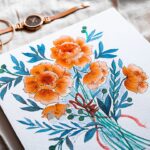
Gouache is a traditional, opaque water-based paint known for its velvety matte finish, vibrant colours, and forgiving nature. It behaves like a bridge between watercolour and acrylic: it dries quickly, can be reactivated with water, and allows you to build smooth layers of bold colour. Because it is so easy to control, gouache is ideal for both beginners and experienced illustrators looking for a calm, meditative creative outlet.
Illustrators such as Tiffany Tan and Little Tiny Egg use gouache for expressive nature scenes, stylised characters, and decorative illustration.
Materials Needed
Paint
Reliable and highly pigmented options include:
- Winsor & Newton Designers Gouache Introductory Set
- Holbein Gouache – buttery texture and excellent colour strength
For a budget set try the Himi style sets. Some have great colours but be aware that some artists report inconsistent performance from them.
Paper
Choose thick paper that resists warping:
- Canson Mixed Media Pad
- Any 250–300gsm / 90–140lb cold-pressed watercolour paper
Gouache performs particularly well on slightly textured surfaces which help grip the paint.
Brushes
Synthetic brushes maintain shape and cope well with repeated wetting:
A small selection of round brushes (sizes 2–8) and a flat brush for backgrounds is sufficient for beginners.
Extras
- Palette
- Two water containers
- Paper towel
- Pencil and kneaded eraser
How to Get Started
- Tape your paper to a board to reduce buckling.
- Add a small amount of water to each colour to create a creamy, opaque consistency.
- Block in your mid-tones first; gouache prefers flat, even areas of colour.
- Add shadows and highlights last—gouache’s opacity allows you to paint light over dark.
- Allow layers to dry before adding detail. If an area lifts unintentionally, reduce the amount of water on your brush.
Tips for Better Results
- Mist dried gouache lightly to reactivate it on the palette.
- Avoid adding too much water—gouache becomes streaky when over-diluted.
- Keep brushstrokes deliberate; the medium lends itself well to graphic, flat colour.
- Use small brushes for crisp edges around illustrated shapes or lettering.
Advanced Techniques
- Dry brushing: Ideal for textured foliage, fur, or subtle atmospheric effects.
- Layered illustration: Combine opaque blocks of colour with fine-liner or coloured pencil details.
- Soft blends: Use wet-on-wet techniques for skies, abstract colour transitions, or botanical backgrounds.
- Mixed media: Works well with collage elements—see /create/collage/ for ideas.
Gouache vs Acrylic Gouache
Gouache and acrylic gouache share a matte finish, but their behaviour differs significantly.
| Feature | Gouache | Acrylic Gouache |
|---|---|---|
| Reactivation | Yes – rewets easily | No – permanent once dry |
| Finish | Matte, slightly chalky | Matte, smoother and more saturated |
| Layering | Can reactivate layers | Crisp, stable layers |
| Best For | Sketchbooks, editable illustration, soft textures | Professional illustration, graphic art, flat colour |
| Price | More affordable | More expensive |
If you enjoy slow, meditative work with the option to reblend or correct, gouache is ideal. If you prefer crisp edges and layers that won’t lift, acrylic gouache may suit you better.
Popular acrylic gouache option:
- Holbein Acrylic Gouache – widely used by illustrators
- Additional shade sets
Useful Links
- Winsor & Newton Designers Gouache
- Canson Mixed Media Pad
- Holbein Acrylic Gouache – comparison reference